Showing posts with label Avemetatarsalia. Show all posts

Thursday, August 24, 2023

Leaping Lagerpetids, and other updates


Preserved elements of Venetoraptor gassenae, from Müller et al. (2023).

I've long considered the Triassic to be the most fascinating period in Earth's history (aside from, perhaps, our own). As well as being a crucial period in understanding the history of Earth's ecosystems and recovery from extinction events, the Triassic has always had an allure and mystery to me, owed in part to its enigmatic, almost alien animals. Researchers have likewise been confounded by many mysteries relating to the Triassic over the years, including the origin of ornithischian dinosaurs. The origins of another group at roughly the same time have proved equally enigmatic: the pterosaurs, yet again.

Pterosaurs, of course, were flying archosaurs that were diverse through most of the Mesozoic, and happen to have been dinosaurs' closest cousins. In my last post, I examined the final extremity of the pterosaurs' existence, at the end of the Cretaceous. In this one I'll be touching (albeit lightly) on the other extremity, namely their beginnings.

And the occasion for this topic? Why, it's Venetoraptor gassenae, an animal described in Nature by Rodrigo T. Müller and colleagues last week. Although neither a dinosaur nor a pterosaur, it is a part of the group containing both, Ornithodira. Like the majority of early ornithodirans thus far, it's from the southern continents, specifically Rio Grande do Sul, Brazil, and is named after the nearby locality of Vale Vêneto (not Venice, as I'd assumed at first glance).

Venetoraptor is a lagerpetid, a group of archosaurs known of since the 1970s, but all species but one were only discovered in the 21st Century. (Or possibly two, should one consider the Scottish Scleromochlus a lagerpetid, as Müller et. al do. Scleromochlus was named in 1907.) Lagerpetids are relevant to our story because, they appear to be pterosaurs' closest relatives. Pterosaurs are such odd animals, highly specialized for flight; even the earliest ones we have are already highly derived. It's prompted many researchers to wonder what the intermediate stages might have looked like, but "proto-pterosaurs" have thus far proved frustratingly difficult to find.

Lagerpetids are, so far, the closest thing we've got, and they look outwardly rather like primitive dinosaurs, not too much like pterosaurs at a first glance. In fact, they were considered dinosauromorphs for decades, and it's only since more or less the start of the current decade that they've consistently been found as pterosauromorphs instead, largely on account of an improving fossil record. Lagerpetids are so-named because of their slender, rather elongated legs; the animal which gave the family its name, Lagerpeton, means "hare reptile". They're known from South America, Madgascar, the southwestern United States, and possibly the UK, and appear to have died out well before the end of the Triassic.

Although I humbly submit that all lagerpetids are pretty interesting animals, Venetoraptor is particularly neat because it's so far the first lagerpetid to actually have decently preserved skull and hand elements.For most other lagerpetids, these leg and hip bones tend to be all we have, with occasional bits of something else to liven things up. The preservation of these comparatively rare elements in Venetoraptor broadens our understanding of the anatomy of these animals considerably.

Venetoraptor's skull features an edentulous (toothless) premaxilla, which appears to have sported some sort of beak. The paper describes this beak as raptorial, like that of a modern bird of prey, though they stop short of saying what the animal's diet might have been. It's worth noting that other archosauriforms which aren't predators, such as parrots for just one example, sport a similarly hooked beak, so this doesn't necessarily indicate that Venetoraptor was an active predator. I personally consider it likely that it was hunting small vertebrates and insects like many of its relatives, but it could always have been doing something entirely different. Since the premaxilla doesn't seem to be preserved in any other known lagerpetids, it remains possible that others in the family also shared this feature.

The hands are also a point of interest, and understandably Müller et al. pay quite a bit of attention to these. There has been some contention in the past over whether lagerpetids were strictly bipedal or not, but based on their comparatively long and slender hind limbs I think this argument was always sort of moot. Venetoraptor has rather large hands that would not be well-suited for walking upon, and most likely were put to other purposes, such as grasping or climbing, though it's hard to say what. The paper also makes a lot out of the particular elongation of digit IV, the longest of the four digits on Venetoraptor's hand, drawing a comparison to the extremely elongated digit IV which makes up the primary support for the pterosaur wing. It's an interesting connection, though not a slam dunk, as other archosaurs, including primitive dinosaurs like Herrerasaurus, have a similarly elongated final digit. Either way, I hope to see more in future studies, as the evolution of the pterosaur wing must be one of the most fascinating stories in vertebrate biology.

We may never find weird, gliding half-pterosaurs like various authors have envisioned, but lagerpetids can still give us an intriguing look at the split between the earliest dinosaurs and pterosaurs, and provide us with hints about how pterosaurs evolved so rapidly to become the first flying vertebrates. I'm excited to find out more about this group as time passes and reveals even more surprises for us.

There's been a lot of other interesting finds I've missed out on recently, such as the oldest known diplodocoid sauropod and an absolutely massive phytosaur, but nevertheless, I persevere. I've had a rather chaotic year but I'm determined to keep Archosaurophilia rolling no matter what.

More to come soon - I promise!

Sources:

  • Müller, Rodrigo T., Martín D. Ezcurra, Mauricio S. Garcia, Federico L. Agnolín, Michelle R. Stocker, Fernando E. Novas, Marina B. Soares, Alexander W. A. Kellner, and Sterling J. Nesbitt. (2023) "New reptile shows dinosaurs and pterosaurs evolved among diverse precursors." Nature 620: 589-594. DOI: 10.1038/s41586-023-06359-z

Friday, June 24, 2022

Life in the Age of Pterosaurs


Tethydraco from Apple TV+'s Prehistoric Planet.

If you grew up with BBC's landmark documentary Walking With Dinosaurs like I did, you might remember a scene from its last episode, "Death of a Dynasty", featuring a pterosaur called Quetzalcoatlus. It swoops down, skims for a fish from a small lake, and then lands by the shore. On the ground, its gangly form almost seems to limp, forecasting its coming extinction. Kenneth Branagh's narration solemnly informs us that this species of "delicate glider", with its 13-meter wingspan, are the last of their kind, pterosaurs having entered a mortal decline. As it flies away, scared off by a large crocodilian, we are told that the skies of the future will belong to the birds.

This was the popular image of pterosaurs at the end of the Cretaceous period for most of the 20th century: a dying breed, dwindling in numbers due to competition from modern birds. This was not a bad guess, per se, given what little information was available during much of that time. For decades, poor sampling limited our understanding of the evolution and life history of Late Cretaceous pterosaurs, and what representatives we did have were few, and mostly very large, seeming to imply that pterosaurs had abandoned the small flyer niches that birds dominate today.

Needless to say, a lot has changed in the last 20 years, and the image of the sad Quetzalcoatlus counting the days until its extinction is now a thing of the past. I was inspired by the impressive diversity of pterosaurs that I recently saw in Prehistoric Planet to write this post. The last of the pterosaurs were more diverse than we could have imagined a few decades ago, and it is my hope that this post will serve to paint you a picture of the world that they lived in.

The Lifestyles of Dragons

Were one to take popular culture at face value, one would get the impression that there were only a couple types of pterosaur (if you're lucky enough not to just get a bargain-bin pterodactyl for your trouble) and that they all did basically the same things. Typically these movie monsters only come in a "Rhamphorhynchus" variety or a "Pteranodon" variety, the latter often with teeth. It's also uncommon to see them exhibiting any behaviors other than skimming for fish or else picking up hapless prey with their feet like oversized ospreys. (The latter, incidentally, is a behavior which wasn't possible for any pterosaurs that we know of; their feet simply weren't built to grasp and bear a great deal of weight.)

Pterosaurs resembling Rhamphorhynchus and Pteranodon as glimpsed in the webcomic "Homestuck" by Andrew Hussie.

This limited pop-culture snapshot of pterosaurs does them a bit of a disservice. They arose at roughly the same time the dinosaurs did, during the Late Triassic, and disappeared with the mass extinction event at the end of the Cretaceous. During their more than 160 million years on our planet, they achieved a great degree of morphological and ecological diversity, making up a few hundred known species so far.

Across this large spread of different species, scientists have inferred a great number of possible lifestyles, some of which are now disproven. These include insectivory, frugivory, durophagy, terrestrial stalking, carrion probing, diving, macropredatory hunting, suspension feeding, and yes, skimming. Ultimately, each pterosaur group responded to the needs of their environment in greatly varying ways, and the clues to how they did this lie in the fossils they left behind.

One thing which does seem to unite all the pterosaurs, aside from their ability to fly (shared with only two other vertebrate groups, the birds and the bats), are the circumstances of their birth. As far as we can tell, all pterosaurs began life in the same way, within pliable-shelled eggs incubated under substrate, as so many reptiles do today. All archosaurs, as far as we know, retained the egg-laying behavior that's ancestral to all tetrapods (although Dinocephalosaurus, a marine Triassic reptile which might be an archosauromorph, is known to have given live birth).

Upon emerging from their eggs, pterosaur hatchlings, often called by the more whimsical term flaplings, would most likely have had to fend for themselves. Although a case has been made for a period of limited parental supervision or outright parental care, the evidence as it stands currently favors a strongly precocial development for pterosaur flaplings, based on the fact that pterosaurs seem to have hatched with their flight adaptations already highly developed. This is an ecological strategy which is employed by many modern animals, including megapodes and several other bird groups. Considering that the first pterosaur eggs and embryos weren't actually known to science until this century, I think it is possible that a bigger sample size may eventually show that some pterosaur groups developed altricial behaviors instead. Nevertheless, I'd also wager that precocious flaplings were the ancestral state, and indeed the norm.

This has interesting implications for the roles pterosaurs played in ecosystems. After all, a flapling with a half-meter wingspan striking out on its own is probably not going to eat the same things, or eat as much, as an adult sixty times its size. Pterosaurs apparently grew fast - more so in the later, more derived forms than their earlier relatives - and would have most likely filled a number of ecological roles throughout their lives. In this way, flaplings could have avoided direct competition with their adult counterparts by not pursuing the same food sources.

In light of all this, we can see two types of diversity that pterosaurs would have displayed at different times: taxonomic diversity and ecological diversity. At some times in the history of the group, the former would have been less than the latter, as we'll see in the next sections. It's time to leave the big picture of pterosaurian life history behind, and to have a closer look at a successful group which dominated the skies of the late Cretaceous world.

The Reign of the Azhdarchids

Hatzegopteryx hunting the Romanian dinosaur Zalmoxes, by Mark Witton. Originally published in Naish & Witton 2017. Retrieved via Wikimedia Commons. CC BY-SA 4.0

In 1971, the world of paleontology was undergoing a rapid evolution. The science had, during the 1960s, just emerged from a lengthy hibernation that spanned the Great Depression and Second World War. Pioneering studies of the active, birdlike attributes of dinosaurs were just emerging onto the scene. That year, in Big Bend National Park, Texas, something new would likewise mark a leap forward in the study of pterosaurs.

Douglas A. Lawson, then only 23 or 24 years old, found something peculiar in the park's outcroppings of the Javelina Formation: the partial left wing of a truly massive pterosaur. First named Quetzalcoatlus northropi in 1975, after the Aztec god Quetzalcoatl and the aircraft designer John K. Northrop, this animal wasn't just remarkable for its truly immense size (with a wingspan estimated somewhere in the 11 meter range), but also for the manner of its fossilization. Up to that point, pterosaur fossils were known from marine deposits, such as the Blue Lias of England or the Solnhofen Limestone of Germany, but almost unheard of in terrestrial environments. Although an inland sea crawled up the American interior at the time Quetzalcoatlus lived, the Big Bend would still have been a great distance from the nearest shoreline. Clearly, something about the idea of pterosaurs exclusively being fish-eaters from marine and seaside habitats was amiss.

A related animal, Arambourgiania, had actually already been identified from a cervical vertebra found in the phosphate deposits of Jordan in the 1940s, and studied in the 1950s. Aside from its size, however, scientists of the time could glean little from this single bone. In the 1980s, the Soviet paleontologist Lev A. Nesov connected the dots with his description of another pterosaur from the Cretaceous of Uzbekistan. This animal, named Azhdarcho, a Persian word for "dragon", would in turn give its name to a family uniting all three of these genera, and even more in the years to come.

Most work on the Azhdarchidae, ultimately, would occur in the 21st century, with over a dozen new genera being named in the last 22 years. They were a cosmopolitan group, with specimens of azhdarchids, or of closely related animals, being found on every continent except Antarctica. Even that exception may be overturned eventually, as large pterosaur bones, albeit not verifiably azhdarchid in nature, are known from the latest Cretaceous of the Antarctic Peninsula. As a better picture of these animals has been painted by more complete fossils, we've started to understand a lot more about the shape and lifestyle of the azhdarchids. Although there have been several competing hypotheses, many researchers now believe that they lived a terrestrial lifestyle, stalking and opportunistically hunting small prey like storks or ground-dwelling hornbills of the family Bucorvidae do today. They certainly wouldn't have limped; in fact, they would have been pretty confident striders, moving upright on all fours.

 Quetzalcoatlus, Arambourgiania, and Hatzegopteryx are all in approximately the same size range, with wingspans of 10 meters or more, and represented the largest flying animals ever known to have lived. They weren't all giants, however, and many species are much smaller. Their wide distribution during the Late Cretaceous suggests that they were an adaptable group which were at home in many different habitats. It has often been assumed that azhdarchids were long-distance gliders, and would have made cross-continental flights, but recent studies have cast some doubt on this. The fact that Romanian pterosaurs like Hatzegopteryx are so unique among the azhdarchids for their short necks and robust bodies implies that azhdarchid species had distinct regional differences, and likely were making long-distance voyages only rarely. Contrary to this hypothesis, there is a cervical vertebra from Tennessee which has been attributed to the otherwise Jordanian Arambourgiania, but I'm personally inclined to wait and see whether that actually pans out.

Azhdarchids had a long temporal range too, existing for at least 40 million years, and possibly quite a bit longer. Despite previous suggestions that they were in decline, their success only seems to have been abruptly halted by the end-Cretaceous extinction event. For a long time, three or four azhdarchid species were the only pterosaur fossils known from the last few million years of the Cretaceous, but this has also changed. In the 2010s, a remarkable fossil assemblage from Morocco gave us another piece of the puzzle and proved that azhdarchids weren't the only pterosaur group to still be around when the asteroid hit.

A Life at Sea

Nyctosaurus, illustrated by Dmitry Bogdanov. This genus was extinct by the Maastrichtian, but the relatively complete fossils we have for Nyctosaurus may help us to reconstruct its close relatives. Retrieved via Wikimedia Commons. CC BY-SA 3.0

In the second half of the 19th century, a remarkable fossil formation was first identified and explored in the American Great Plains. Most famous for its outcroppings in Kansas and Nebraska, the Niobrara Chalk was deposited during the middle of the Late Cretaceous, approximately 87 - 82 Ma, under the waves of the Western Interior Seaway. I mentioned this inland sea briefly in the last section. At the end of the Cretaceous period, 66 Ma, the Seaway was still present but receding. In the timeframe of the Niobrara Chalk, however, the sea was at its widest extent and teeming with life.

Among the many fossils known from the formation, one can find the remains of two distinct but closely related pterosaur lineages which are relevant for this part of our story. The first is Pteranodon, perhaps the most famous pterosaur, which was discovered there in the 1870s. As the first pterosaur found outside of Europe, it quickly gained notoriety and by the 20th century had cemented its place in popular culture. Its less famous cousin, Nyctosaurus, was discovered a few years later. It wasn't until the 21st century that the first fossils of its magnificent, almost antler-like head crest were described, giving us the picture we have of this genus today.

The Pteranodontidae and Nyctosauridae are usually united in a group termed Pteranodontia, as they are each other's closest cousins. They share the same toothless beaks (similar to, but evolved separately from, those of azhdarchids) and the same preference for marine habitats. Despite how common they were in the Coniacian, Santonian, and Campanian stages of the Cretaceous, it was thought until quite recently that both groups were extinct before the beginning of the Maastrichtian.

This changed in 2018, when pterosaur fossil findings from the Ouled Abdoun Basin in northern Morocco were published by Nicholas Longrich and colleagues. These phosphate beds had previously offered up the azhdarchid Phosphatodraco in the 2000s, and are dated to approximately 66 Ma, the latest Cretaceous. The new pterosaurs described from there included a pteranodontid, Tethydraco, as well as three nyctosaurids, Alcione, Barbaridactylus, and Simurghia. This has shown conclusively that these two families of pteranodontian pterosaurs did, in fact, persist to the end of the Mesozoic after all.

Although these finds are mostly quite fragmentary, we can extrapolate from their better-known, earlier relatives to gauge how they lived. Looking at Tethydraco first, the well-studied Pteranodon gives us a pretty good idea of its lifestyle. Pteranodontids were among the largest pterosaurs, with large male Pteranodon reaching a wingspan as large as 7.25 meters. They seem to have exhibited size dimorphism between the sexes, with females being considerably smaller. Pteranodontids, like azhdarchids, had a relatively upright bodily carriage and would probably have been able to move comfortably on the ground.

Unlike the shorter wings of azhdarchids, however, pteranodontid wings were more akin in their proportions to those of soaring seabirds like albatrosses, and would have enabled long, energy-efficient flights over the water surface. It was originally proposed that pteranodontids were skimmers, but they don't seem to have been particularly well adapted for this. Instead, it's more likely that they bobbed on the water surface while dipping or diving for fish, or perhaps dove for fish while on the wing. It's generally accepted now that pteranodontids would have had little issue launching into flight from the water's surface.

Nyctosaurids were similarly adapted for long-range soaring over water, but had a peculiarity of their wings which they did not share with pteranodontids. The membrane of a pterosaur's wing was supported by one, superelongated finger. The other fingers would have remained as a hand of sorts at the front of the wing, acting as a surface for walking or other functions. Nyctosaurids were missing this, however, having lost all of their fingers except the ones supporting their wings. This would suggest that nyctosaurids were much more awkward on the ground than their pteranodontid relatives, and might imply in turn that they spent less of their lives on the ground.

What would such a life have looked like? If nyctosaurids followed the precocial pattern like other pterosaurs seem to have done, they would have hatched with at most a minimum of parental supervision, would have started flying almost immediately, and would have grown rapidly to their adult size (over 2 meters in the largest nyctosaurids) in just a year. It's fascinating to think about how these pterosaurs lived, and equally fascinating to learn that pterosaurs as different from one another as the azhdarchids and the nyctosaurids both lived to the end of the Cretaceous.

Aside from the Ouled Abdoun pterosaurs, other pteranodontians now known from the Maastrichtian include nyctosaurid remains from Maryland and Brazil, suggesting that they were still widespread. There is also the matter of a small pteranodontian from the famous terrestrial Hell Creek formation, known as the Triebold pterosaur. Since this specimen has not yet been properly described, it's hard to say any more about it than that.

It is, indeed, also still a possibility that more pterosaur groups persisted up to the K-Pg boundary, although there are not yet any examples to point to. Although the Javelina azhdarchid, from the same Big Bend deposits as Quetzalcoatlus northropi, has been interpreted as a thalassodromid/thalassodromine (depending on whether you think that group is a subset of Tapejaridae or not) the evidence would seem to support an azhdarchid identity for this animal instead. Despite this, I don't think it's all too unlikely that evidence will one day turn up of tapejarids and/or thalassodromids surviving to the end of the Cretaceous. We'll have to wait and see.

The Bird Quandary

A figure from Longrich et al. (2018) comparing body size in marine (blue) and terrestrial (brown) Maastrichtian pterosaurs and birds. Retrieved via Wikimedia Commons. CC BY-SA 4.0

There is a point which I've been haphazardly poking at throughout this entire post: the ecological diversity of Maastrichtian pterosaurs. My master plan all along was to write this section, analyzing the old assumption that birds outcompeted pterosaurs in the Cretaceous period, leading to the pterosaurs' terminal decline. This hypothesis was implicitly referenced in the Walking With Dinosaurs segment I brought up at the start of the post, and has been bouncing around the literature for a long time. In light of all this new evidence, how does it hold up?

In light of new evidence, there are now a couple of chief points which, in fact, make this theory look more unlikely than before. These are:
  1. The fact that Maastrichtian pterosaurs were more taxonomically diverse than previously assumed.
  2. New evidence of prenatal development suggesting widespread precociality in pterosaurs, which implies that the young filled different niches than the adults.
Should we put credence in the hypothesis that pterosaur flaplings occupied small-bodied niches that the adults did not, it doesn't seem so likely that birds were outcompeting pterosaurs in these niches after all. Consider how abundant azhdarchids were in the Maastrichtian world; their young would have been all over the place, and even if birds were growing more diverse at this time, it hardly seems like the pterosaurs were fighting for their lives. The idea that the last pterosaurs found refuge in huge body sizes to avoid competing with birds, in light of all this, seems to be unsupported, especially when adult azhdarchid relatives no bigger than 2.5 meters in wingspan are now also known.

The bird competition hypothesis was never a bad one; for a long time, there really did seem to be a significant drop-off in pterosaur diversity in the last stages of the Cretaceous, accompanied by an apparent rise in the diversity of birds. Time was against the pterosaurs, but not necessarily in the way that 20th century paleontologists assumed. The very same lightweight, fragile bones which made them such superb fliers also meant that relatively few pterosaurs would have been preserved, and those that were would generally be fragmentary. Time was also against them in the sense that, as a general maxim, the very first and very last members of a species or group will tend not to be fossilized. This is known as the Signor-Lipps effect, which proposes that extinctions of animal groups will often appear more protracted than they actually were. This could very well be the case with pterosaurs, which would explain why this decline looks less pronounced as we get more fossil data.

Thus, the evidence as it stands now suggests that pterosaurs were doing just fine up to a point, only to abruptly go extinct along with the non-avian dinosaurs at the end of the Cretaceous, most probably because of the Chicxulub impact event. More evidence may back this up, or it might turn this hypothesis entirely on its head. Either outcome would be equally exciting to discover more about; that's the beauty of science!

The Age of Pterosaurs

Our knowledge of pterosaurs is growing by leaps and bounds at a rate we've never seen before. This doesn't just go for the very last pterosaurs either; it goes for the earliest pterosaurs in the Triassic, the period in the Late Jurassic and Early Cretaceous when they flourished, and everywhere in between. Pterosaurs first became known to science in the late 18th century, but the vast majority of all published studies about them have come out since the year 2000. Entirely new families are being identified, gaps are being filled in, and the trajectory still seems to be upward from here.

We live in an age of pterosaurs, but more generally, we also live in an age of paleontology. If the 1960s - 1980s were a renaissance, then I don't know what to call the period we're in now, where the field has never been more vibrant. What I do know is that this blog post is probably going to be outdated in just a couple of years, and I couldn't be happier about it.

Barbaridactylus from Apple TV+'s Prehistoric Planet.

Thanks for reading. Our next post will be about sauropod dinosaurs, a group which I've so far neglected to mention very much. After that, who knows? The sky is the limit...

Sources:

  • Andres, Brian and Wann Langston, Jr. (2021) "Morphology and taxonomy of Quetzalcoatlus Lawson 1975 (Pterodactyloidea: Azhdarchoidea)." Journal of Vertebrate Paleontology 41.1: 46-202. DOI: 10.1080/02724634.2021.1907587
  • Bennett, S. Christopher. (1995) "A statistical study of Rhamphorhynchus from the Solnhofen Limestone of Germany: Year-classes of a single large species." Journal of Paleontology 69.3: 569 - 580. DOI: 10.1017/S0022336000034946
  • Bestwick, Jordan, David M. Unwin, Richard J. Butler, Donald M. Henderson, and Mark A. Purnell. (2018) "Pterosaur dietary hypotheses: a review of ideas and approaches." Biological Reviews 2018.93: 2021 - 2048. DOI: 10.1111/brv.12431
  • Butler, Richard J., Paul M. Barrett, Stephen Nowbath, and Paul Upchurch. (2009) "Estimating the effects of sampling biases on pterosaur diversity patterns: implications for hypotheses of bird/pterosaur competitive replacement." Paleobiology 35.3: 432 - 446. DOI: 10.1666/0094-8373-35.3.432
  • Kellner, Alexander W. A., Taissa Rodrigues, Fabiana R. Costa, Luiz C. Weinschütz, Rodrigo G. Figueiredo, Geovane A. De Souza, Arthur S. Brum, Lúcia H. S. Eleutério, Carsten W. Mueller, and Julian M. Sayão. (2019) "Pterodactyloid pterosaur bones from Cretaceous deposits of the Antarctic Peninsula." Anais da Academia Brasileira de Ciências 91.2: e20191300. DOI: 10.1590/0001-3765201920191300 
  • Longrich, Nicholas R., David M. Martill, and Brian Andres. (2018) "Late Maastrichtian pterosaurs from North Africa and mass extinction of Pterosauria at the Cretaceous-Paleogene boundary." PLoS Biology 16.3: e2001663. DOI: 10.1371/journal.pbio.2001663
  • Martin-Silverstone, Elizabeth, Mark P. Witton, Victoria M. Arbour, and Philip J. Currie. (2016) "A small azhdarchoid pterosaur from the latest Cretaceous, the age of flying giants." Royal Society Open Science 3:160333. DOI: 10.1098/rsos.160333
  • Naish, Darren, and Mark P. Witton. (2017) "Neck biomechanics indicate that giant Transylvanian azhdarchid pterosaurs were short-necked arch predators." PeerJ 5:e2908. DOI: 10.7717/peerj.2908
  • Naish, Darren, Mark P. Witton, and Elizabeth Martin-Silverstone. (2021) "Powered flight in hatchling pterosaurs: evidence from wing form and bone strength." Science Reports 11.13130. DOI: 10.1038/s41598-021-92499-z
  • Smith, Roy E., Anusuya Chinsamy, David M. Unwin, Nizar Ibrahim, Samir Zouhri, and David M. Martill. (2021) "Small, immature pterosaurs from the Cretaceous of Africa: implications for taphonomic bias and palaeocommunity structure in flying reptiles." Cretaceous Research 130:105061. DOI: 10.1016/j.cretres.2021.105061
  • Unwin, David Michael and D. Charles Deeming. (2019) "Prenatal development in pterosaurs and its implications for their postnatal locomotory ability." Proceedings of the Royal Society B 286:20190409. DOI: 10.1098/rspb.2019.0409
  • Witton, Mark P. and Darren Naish. (2015) "Azhdarchid pterosaurs: water-trawling pelican mimics or 'terrestrial stalkers'?" Acta Palaeontologica Polonica 60.3: 651 - 660. DOI: 10.4202/app.00005.2013

Tuesday, May 31, 2022

Prehistoric Planet - A Review, and Hopes for the Future


I still feel somewhat like I'm waking up from a dream. I had been looking forward to this program for a while, but it still exceeded my wildest expectations. I think it is safe to assume that most of the people who have found and read this blog are already well aware of Prehistoric Planet, and most have probably watched it. Nevertheless, I wanted to briefly share some of my thoughts about this series and discuss what it means for the future of paleontology media.

So, it goes without saying that it looks and sounds fantastic. Jellyfish and MPC did a great job of designing these creatures and bringing them to life, supported by spot-on location filming and direction which just makes every episode a visual feast. The Foley work and animal vocalizations were all convincing, with everything from footsteps to warbles and rumbles sounding absolutely realistic. I can't tell you how good it is to have a piece of media where dinosaurs don't just stomp and roar all the time; in Prehistoric Planet, they feel like real animals, not movie monsters.

The naturalistic approach that Prehistoric Planet takes is its strongest quality. We are presented with a picture of these animals in their natural habitats, expressing a diverse array of behaviors, many of which have never been depicted in a documentary before. As a result of this, and the very modern animal designs, what you get is a highly immersive experience with the most believable prehistoric animals I've ever seen.

I've heard a few commentators jokingly call this "All Yesterdays: The TV Series". It's impossible to deny that the DNA is there; the brilliant Darren Naish of TetZoo fame was the lead scientific consultant on this show, after all, and the speculative approach to portraying prehistoric animal behaviors is certainly prominent. I don't mind this at all, in and of itself, but having watched it alongside several people who didn't have as much familiarity with paleontology as I did, and having read many, many reviews, I became cognizant of the fact that there is some confusion among viewers as to which behaviors we have direct evidence for, and which ones we do not.

I fielded a lot of questions from my companions about these moments, and in most cases I was able to point out where identical or similar behaviors are known from dinosaurs' living relatives, but I must admit that I was a little disappointed that there wasn't more supplemental material to clear these things up. The Uncovered episodes are great, but they are only five minutes each and only cover a specific item of interest from their corresponding episodes. I feel like Prehistoric Planet really needed a behind the scenes documentary for this, or perhaps even a shorter companion series to cover more of the speculative behaviors displayed. As it is, things like hadrosaurs navigating by the stars go mostly unexplained.

I was also a bit disappointed by the lack of representation for three major animal groups in this series: mammals, birds, and crocodile-line archosaurs. For mammals, we briefly get a creature that's said to be modeled on Cimolodon in the forest fire segment of "Ice Worlds"; for birds, there are several cameos of enantiornithines and what might be a brief glimpse of a hesperornithiform in "Coasts"; and as for the poor crocodyliforms, they are not in evidence whatsoever, even in "Fresh Water" where you'd expect them to be all over the place. This feels like a bit of a missed opportunity. I doubt general audiences care that much, but Walking With Dinosaurs had better representation for these groups twenty-three years ago. I realize it's probably very difficult to convince executives that animals like these are important when the ultra-charismatic dinosaurs are right there. Hopefully, should this series continue in some way, the creators will have more leeway in the future.

Speaking of Walking With Dinosaurs, it only feels proper to remark on how far we have come since that other BBC-produced series aired in 1999. Science, needless to say, has grown by leaps and bounds, and as time has passed, it's become increasingly clear that we sorely needed another documentary of that same caliber to cover everything that has changed. From a technical perspective, Prehistoric Planet is light years ahead of where Walking With Dinosaurs was. But why is it important to make this comparison? Although there have been many dinosaur documentaries over the last two decades, some of them good, it is safe to say that among those passionate about paleontology, Walking With Dinosaurs has continued to be considered the gold standard. I was beginning to wonder if anything would ever come close to living up to it. After a number of disappointments (most prominently the 2013 Walking With Dinosaurs movie, which really did not live up to the name) I'm pleased to say that I am finally satisfied. Despite my small quibbles, I loved this series, and I hope to see more from these creators in the future. Failing that, if we are lucky, a high-quality documentary such as this may inspire others, having proved that scientifically rigorous dinosaurs, if rendered with enough care, can reach a mass audience.

If you have not streamed this series already, it comes with my highest recommendation. The future for dinosaur media looks pretty bright... for the most part. In a week or two, I expect to have another review post out, this one for the movie Jurassic World: Dominion. My hopes for this one are not quite as high. I expect to be entertained, at least.

Also, keep an eye out for more posts about archosaurs in the meantime. Crocodilians, sauropods, and pterosaurs are overdue for some love.

Kāma'o (Myadestes myadestinus) pronounced extinct


M. myadestinus taxidermy specimen from the Bishop Museum, Honolulu. Retrieved via Wikimedia Commons. CC0

I usually enjoy returning to old topics with new information, but in this case I wish I wasn't. Readers will recall that I previously wrote a post on the lost solitaires of the Hawaiian islands back in 2016. At that time, the kāma'o, an endemic Hawaiian thrush, was still officially considered Critically Endangered by the IUCN. After not being spotted since at least 1989, however, the official pronouncement of its extinction was really only a formality.

I doubt that many people took note when this bird was included on the US Fish and Wildlife Service's memo on 29 September 2021, where it and 22 other organisms were proposed for de-listing from the endangered species rolls due to extinction. The ivory-billed woodpecker (Campephilus principalis) was also on that list, and predictably it got all the headlines.

I'd like to call attention not to the ivory-billed woodpecker, but to a troubling metric seen on that memo: the fact that of those 23 species, nearly half are species endemic to Guam and Hawaii. We still understand so little about the species that we're losing in these Pacific island ecosystems, and I worry that as long as people focus their time and energy chasing woodpeckers that probably aren't there, we risk losing even more of our planet's amazing species - not just birds - that might not be as large or as charismatic, but which are every bit as important. As our planet faces a climate crisis with unforeseeable consequences, I only hope that people who are passionate about the natural world and conservation will find room in their hearts for birds like the small thrushes of the Hawaiian islands, which still need all the help we can give them.

I'd hate to end my first post in a couple of years on such a gloomy note. There's a lot more in the pipeline for this blog in the near future, including a review of the amazing Apple TV series Prehistoric Planet, which should be coming along in the next couple of days. Thank you for your patience!

Sunday, November 3, 2019

The Ruins of the Fabrosaur Empire


Pisanosaurus mertii depicted as a silesaurid. By Nobu Tamura, retrieved via Wikimedia Commons (CC BY-SA 4.0).
Me, a regular and consistent blogger? Surely none of you were ever fooled by this notion. The mood finally strikes again, so why don't I spend a moment catching up on one of the topics I've blogged about before? How are our fabrosaurs faring?

Unfortunately, it seems as if the situation has only grown more dire since we last checked in on the subject of Triassic ornithischians in August 2016. In that article, I walked over the history of Fabrosauridae and a number of supposed Triassic ornithischians. It seems the Revueltosaurus situation has played out again, because the most recent major paper on the subject, Agnolín & Rozadilla (2017), reinterpreted Pisanosaurus as a non-dinosaurian dinosauriform, a silesaurid, based on both dentary and skeletal characteristics. This seems pretty well supported, and in fact had already been mentioned in the literature previously (in 2015), but this wasn't known to me at the time of the article. Separately, McPhee et al (2017) positioned the South African ornithischian Eocursor as an Early Jurassic taxon instead of its previous interpretation as a Triassic animal. (A finding which is not completely resolved, but for now it holds true.)

This has the salutary effect of extirpating the ornithischians from the Triassic period altogether, which raises some serious questions about the origin and evolution of this clade of dinosaurs. Such an extensive ghost lineage has led authors to question just why ornithischian fossils are absent (or nearly so) prior to the beginning of the Jurassic. Matthew G. Baron (whose Ornithoscelida paper with other authors [2017] has been blogged to death during my long absence) has mooted a novel concept to explain away this problem, wherein Ornithischia would be nested within Theropoda, using the unusual Late Jurassic dinosaur Chilesaurus as the linchpin. Described initially as a basal tetanuran by Novas et al (2015) when it was described, its taxonomy has remained problematic since its discovery, because of a few features in its skeleton (namely the presence of a toothless premaxilla and some characteristics of the ilium) which closely resemble those of ornithischian dinosaurs. In this paper, Baron, having previously mooted Chilesaurus as the basalmost ornithischian, suggested that Ornithischia might be within Neotheropoda, positing a few different hypotheses at different positions, but generally making the case that such a relationship would both clear up Chilesaurus' taxonomic quandary, and shorten the ornithischian ghost lineage implied by the traditional phylogeny.

Of course, this does pose the issue of an equally long (or longer) ghost lineage, if we are to consider Chilesaurus the basalmost ornithischian, as it would be far removed from the current earliest known ornithischians from the first stages of the Jurassic. A Late Jurassic taxon of probable Tithonian age, Chilesaurus is separated from its purported relatives, the earliest known ornithischians, by around fifty million years, so if it is indeed the basalmost of that group, then the ghost lineage problem seems to remain anyway. Müller et al (2017) were also quick to jump onto the issue, and while one of their analyses (when recalibrated) did find Chilesaurus to be within Ornithischia, they still hedged their bets and concluded that the current data simply is not strong enough to make a sure statement one way or the other.

Where exactly can we place the enigmatic Chilesaurus among the other dinosaurs? Can the ornithischians really be nested among the theropods to explain their absence in the Triassic fossil record? Or are there, in fact, still Triassic ornithischians waiting to be discovered? All of these questions seem to be tied up in each other as of the most recent studies. Supposedly there's a lot more (a lot more) on the Ornithoscelida issue pending publication so, as always... keep an eye on the literature, guys.

Sources:

Tuesday, December 12, 2017

Oxyurin Odyssey

A selection of members of Oxyurini. Clockwise: Black-headed duck (Heteronetta atricapilla) drake and hen in Rio Grande do Sul, Brazil; Masked duck (Nomonyx dominicus) drakes in Tobago; Ruddy duck (Oxyura jamaicensis) drakes in South Dakota; Maccoa duck (O. maccoa) hen at the San Diego Zoo. All images are retrieved from Wikimedia Commons.
So, waterfowl. You might take your neighborhood mallards for granted as I often have, but waterfowl are really very cool. Yes, even the endless hordes of Canada geese blocking your commute, disgruntled American readers. The order Anseriformes contains something like 180 extant species, and just about all of them are outright fascinating. Today we'll zero in on a small clan of anatids known variously as the oxyurins, oxyurines, or the stiff-tailed ducks. Exactly which of these three names is best for this group is a little ambiguous. "Stiff-tailed ducks" may well be reserved for the members of the type genus Oxyura, and the entirely superfluous debate over whether they represent a "tribe" or a "subfamily" informs the rest. I'll be calling them oxyurins throughout this post for convenience's sake, irrespective of long-defunct Linnaean concerns.

Traits, Position and History
Oxyurins are so-named for the stiff, upward-pointing tail feathers just about all of them share. They're small, compact ducks, usually ranging between 30 and 55 cm (11.8 to 21.6 inches) in full body length; compare with the widespread mallard duck (Anas platyrhynchos) and its 65 cm (25.6 inches). Like the distantly related aythyin ducks, oxyurins are divers, and as such are built with back-set feet which force them to move awkwardly on land. In fact, this condition is more pronounced in this tribe than in any other sort of waterfowl. Ungainly though they are on land, they're all highly competent in the water, appearing almost exclusively in freshwater environments. Almost all species share distinctive blue coloration in the bill in males, bar the black-headed duck (Heteronetta atricapilla). This deviation is unsurprising, because Heteronetta is undoubtedly the basalmost member of this clade. Often included in Oyxurini but excluded here is the musk duck (Biziura lobata) of Australia. This is a little controversial, and many would still include this duck and its notably stiff tail with the oxyurins. More infrequently included is the white-headed duck (Thalassornis leuconotus), another weird Australian duck. Increasing genetic evidence has removed these two Australian species from the oxyurin fold, showing Biziura to be just a short distance outside of the oxyurins and Thalassornis at a position basal to almost the entire anatid family. Another surprise modern genetic analyses have uncovered for us is the fact that Oxyurini is part of the anserine subfamily. The fact that these "ducks" are far closer to geese and swans than they are to the more familiar anatines so common worldwide is somewhat underappreciated, I think; it's difficult to see this just based on gross morphology, so it's a small wonder that, for a very long time, oxyurins were thought to group with most other "ducks".

Relationships of anatid subfamilies and tribes, as per jboyd.net.

Today there are eight (ish) oxyurin species in three genera. The aforementioned black-headed duck is the only member of its genus, as is the masked duck (Nomonyx dominicus). The remaining six species are all members of the eponymous genus Oxyura. The black-headed duck is restricted to southern South America while the masked duck ranges out of South America and into Mexico and the Caribbean. Members of Oxyura, however, can be found on every continent but Antarctica. The tribe (unsurprisingly) sports a few more among its number once you go back in time. The most recent losses to this clan are all species of Oxyura, the most notable of these being the New Zealand stiff-tailed duck (O. vantetsi). The extinction of this species some time before 1600 CE marked the extirpation of the oxyurins from New Zealand. Closely related to Australia's blue-billed duck (O. australis), the New Zealand stiff-tail was even smaller than this already quite runty waterfowl, but little else is known for sure about it.

The ranges of the various Oxyura species. Yellow: Ruddy duck (O. jamaicensis). Red: Lake duck (O. vittata). Green: Maccoa duck (O. maccoa). Dark blue: Blue-billed duck (O. australis). Light blue: White-headed duck (O. leucocephala). Retrieved from Wikimedia Commons.
A few other fossil species have been assigned to Oxyura, but only O. zapatanima of the Pleistocene of Jalisco, Mexico appears to unambiguously represent a valid example. Further back, the fossil taxon Lavadytis pyrenae from the Miocene of Nevada seems to pin the New World as a major origin point for many oxyurin species, which isn't surprising when you consider that the Americas have the greatest diversity of them. Other extinct taxa like Mionetta and Tirarinetta, which might be oxyurins, suggest that they had their genesis in the Oligocene and rapidly diversified around the time of the Miocene Thermal Optimum. (Also, the Lavadytis paper seems to recover the lake duck [Oxyura vittata] as sister to a clade including all other Oxyura species, but also Nomonyx. Anatid taxonomy is a mess.)

The Ways of the Cuckoo Duck
With the cladograms safely tucked away, we can talk a little more about the varied lifestyles of the stiff-tailed ducks. One of the most-noted talking points about oxyurins are the egg-laying habits of the black-headed duck (Heteronetta atricapilla). A small bird with a vaguely spatulate bill, the black-headed duck is, as discussed above, the basalmost member of its tribe and in many gross details more closely resembles dabbling ducks than its more specialized relatives. Thanks in part to an excellent David Attenborough documentary segment called "Nature of the cuckoo duck", the black-headed duck's status as the only obligatory brood parasite among the world's waterfowl has made it of significant biological interest. For those not tapped in on the terminology, what this means is that the black-headed duck never makes its own nests, and must seek out those of other birds in which to slip its eggs in order to propagate. This is what has earned this remarkable little duck its nickname.

A black-headed duck photographed near Trelew, Argentina by Gustavo Fernando Durán.

Rather than achieving perfect mimicry of another species in their eggs as many brood parasites do, the black-headed duck appears to have made up for it in sheer breadth. Its eggs have been discovered in the nests of many other species, including other waterfowl, coots, gulls, and even harriers! They must be fearless indeed to approach the nests of birds of prey (or, more likely, they can't tell the difference). Since oxyurin ducklings are highly precocial and are capable of wandering off on their own shortly after birth, they don't belabor their adoptive parents too long and strike out into the world in very short order. Interestingly, the literature reports some other alleged cases of brood parasitism in other oxyurins, including the blue-billed duck (Oxyura australis), but no serious research seems to have been committed to this matter. Whether the "cuckoo duck" is really unique among the oxyurins in this respect remains to be seen. In either case, it's no less charming.

The Amazing Whatsit of the Lake Duck
And now to the awkward bit. Like it or not, along with feeding, reproduction is one of the most essential biological functions in nature. If you're not keen on this special brand of scientific enlightenment, then you're welcome to skip forward to the next section. I won't judge you (but the ducks might).

A lake duck, displaying the awkward gait typical of oxyurins, at the Wuppertal Zoo in Wuppertal, North Rhine-Westphalia, Germany. Photographed by Georg Sander.

The reproductive equipment of oxyurins is remarkable, even among ducks. The "whatsit" in question here is the male reproductive organ, the fair and balanced term for which is, in this context, the "intromittent organ", not "penis". This is because, as far as we can tell, the intromittent organs of birds and reptiles aren't homologous with those of mammals - that is to say, they don't share a common evolutionary origin and apparently were developed separately. It's worth noting that most male birds don't have such organs; something like 97% of all avian species reproduce by way of a "cloacal kiss", where the openings of the birds are pressed together for a transfer of semen. The only birds that have retained their intromittent organs, as their closest living relatives (the crocodilians) do, are the basalmost bird clades, including galloanserans and palaeognaths. This in itself has implications for the reproductive habits of non-avian dinosaurs, but that's a post for another day.

At any rate, other ducks have particularly prominent and oversized intromittent organs, but male oxyurins take it to another level. Most famous of these is the lake duck (Oxyura vittata), the intromittent organs of which have been measured in excess of 40 cm (15.75 inches), or almost the length of its entire body (!), though they usually seem to measure in at a "mere" half of that. This gives the lake duck the honor of having the largest reproductive organ-to-body ratio of any vertebrate. That being said, it does seem to get a disproportionate amount of press for this distinction, because other oxyurins also have rather large intromittent organs. Studies have indicated that the size of these organs varies so widely in response to environmental factors, chief among which appears to be competition between males. When in an environment in which more male ducks than females can be found, their average sizes becomes far greater. Oxyurin phalluses notably sport a set of brush-like bristles at the tip, a bizarre little adaptation which seems to serve some role in removing the material of competing males from prospective mates. They also all share the same shape, that of a counterclockwise corkscrew which unfurls when in use, one which is shared by some other waterfowl.

Interestingly, female ducks of this tribe (and a few others) likewise host their own elaborate corkscrews in their internal anatomy, but these run clockwise, opposite to their male counterparts. This seems to pose a means of thwarting penetration by male ducks, a serious concern in a type of bird which practices forced copulation at an alarmingly high rate. Between these bizarre mechanisms and the seemingly ultraflexible sexual anatomy of male oxyurins, it's clear to see how the highly promiscuous habits of these little ducks are a driving force in their reproductive evolution.

The Magnificent Butterball
So, let's move on to less shocking territory and spend a moment focusing on my personal favorite of the group, the ruddy duck (Oxyura jamaicensis). In some parts of the USA, it's apparently sometimes called the "butterball", which is just so impossibly charming that I feel obliged to mention it at least twice. A handsome little duck of about 38 cm (15 inches), in the North American part of its range it's instantly recognizable when compared to conterminous waterfowl, thanks to its bright blue beak, "bumblebee" wing beat, and diminutive size. It ranges widely across North America (including the author's native Ohio, where I've spotted the funny little birds in local wetlands on a couple of occasions), and also into South America. Its populations there (including the Andean duck O. j. ferruginea) are sometimes regarded as separate, but the popular mood among ornithologists now seems to be to treat them as part of the ruddy duck assemblage rather than distinct species. Interestingly, the ruddy duck has also been introduced to Europe, whether purposefully or accidentally by bird collectors, and has caused significant concern by competing and apparently even interbreeding with the endangered white-headed duck (O. leucocephala). Once hosted in the British Isles in the thousands, recent culling efforts have reduced their number to no more than a hundred individuals, seeming to spell an end to this species' European adventure.

Ruddy duck drake in flight. Photographed at the Benton Lake National Wildlife Refuge, Montana, by Neil Mishler (USFWS).
Despite its unwelcome appearance abroad, the ruddy duck remains popular with birders in North America, thanks to its striking appearance and amusingly bold behavior in the breeding season, as well as the odd "bubbling" displays males put on when displaying. The naturalist John Charles Phillips sounds almost charmed by its idiosyncrasies when he writes of the bird in his 1926 work on waterfowl, “Its intimate habits, its stupidity, its curious nesting customs and ludicrous courtship performance place it in a niche by itself…. Everything about this bird is interesting to the naturalist, but almost nothing about it is interesting to the sportsman.” The name "butterball" apparently derives from the almost round shape of the bird when prepared to cook, which certainly lacks the cuddly connotations implied by the alias. Although it has a bad reputation among some hunters as a "trash duck" on account of its diving habits, it was regarded as a delicacy a century ago, and it still has its fans today. Less amenable to ruddy ducks are grebes, with whom they occasionally compete for living space and food; grebes have even been observed to aggressively attack ruddy ducks at some times of the year, even pursuing and pecking at them from underwater where most other animals can't touch them. It's easy to see a bit of karmic justice in this, when you consider that ruddies themselves chase other animals during the breeding season, including other ruddies, different waterfowl, and even rabbits, apparently out of pure pique (or pure testosterone). But needless to say, it's just the way of the wild. It certainly adds to their long list of idiosyncrasies and makes them all that much more likable.

Onward Oxyurins
And so we come to the end of our odyssey and reflect. The charm and scientific depth of these birds certainly makes them worthy of our attention, and as we've seen, some facts about them have become rather well known to general audiences, and not just the scientifically inclined. Still, in the course of doing my research on the stiff-tailed ducks, I discovered that many of the novelties with which we credit individual species are apparently shared among the other members of the group, but ignored or less well-researched. There's certainly a lot more about these ducks that's interesting, but which I just didn't have the time or space to cover here. I encourage anyone interested in waterfowl in particular, or wildlife in general, to go out and do their own reading. Many of the sources mentioned below were very illustrative and led the way to other resources on the subject. And better still, the stiff-tails are practically everywhere; if you get a chance, go out and see some for yourself.

Sources:
  • All About Birds. Ruddy Duck. Retrieved on 12/12/17.
  • Alvarez, Rafael. "A Pleistocene avifauna from Jalisco, Mexico". Contributions from the Museum of Paleontology, the University of Michigan 24.19 (1977): 205-220.
  • Attiwill, A. R. "Possible nest-parasitism in the Australian stiff-tailed ducks (Anatidae: Oxyurini)." Emu 81.1 (1981): 41-42.
  • Birkhead, Tim R., and Patricia Brennan. "Elaborate vaginas and long phalli: post-copulatory sexual selection in birds." Biologist 56.1 (2009): 34-38.
  • Boyd, John H. III. "TiF Checklist, Anseriformes". Retrieved on 12/12/2017.
  • Brennan, Patricia LR, et al. "Coevolution of male and female genital morphology in waterfowl." PLoS one 2.5 (2007): e418.
  • Cabrera, María B., Diego Montalti, and Luciano N. Segura. "Breeding phenology and new host list of the black-headed duck (Heteronetta atricapilla) in argentina." The Wilson Journal of Ornithology 129.2 (2017): 311-316.
  • Guthrie, Daniel A. "Avian material from Rancho del Oro, a Pleistocene locality in San Diego County, California." Bulletin, Southern California Academy of Sciences 109.1 (2010): 1-7.
  • Johnsgard, Paul A. "Handbook of waterfowl behavior." Handbook of Waterfowl Behavior, by Paul Johnsgard (1965): 7.
  • Johnsgard, Paul A., and Montserrat Carbonell. Ruddy Ducks & Other Stifftails: Their Behavior and Biology. University of Oklahoma Press, 2010.
  • Johnsgard, Paul A. "Waterfowl of North America: STIFF-TAILED DUCKS Tribe Oxyurini." Waterfowl of North America, Revised Edition (2010) (2010): 14.
  • Livezey, Bradley C. "Phylogeny and comparative ecology of stiff-tailed ducks (Anatidae: Oxyurini)." The Wilson Bulletin (1995): 214-234.
  • Maxmen, Amy. "Sexual competition among ducks wreaks havoc on penis size." Nature 549.7673 (2017): 443-444.
  • McCracken, Kevin G. "The 20-cm spiny penis of the Argentine Lake Duck (Oxyura vittata)." The Auk 117.3 (2000): 820-825.
  • Shaw, Hank. "Ruddy Ducks: The Original Butterball Turkey", The Atlantic. Retrieved on 12/12/17.
  • Stidham, Thomas A., and Richard P. Hilton. "New data on stiff‐tailed duck evolution and dispersal from a new species of diving duck (Anseriformes: Anatidae: cf. Oxyurinae) from the Miocene High Rock Caldera in north‐west Nevada, USA." Papers in Palaeontology 2.1 (2016): 41-58.
  • Worthy, Trevor H., and Michael SY Lee. "Affinities of Miocene waterfowl (Anatidae: Manuherikia, Dunstanetta and Miotadorna) from the St Bathans Fauna, New Zealand." Palaeontology 51.3 (2008): 677-708.
  • Worthy, Trevor Henry. Tertiary fossil waterfowl (Aves: anseriformes) of Australia and New Zealand. Diss. 2008.

Tuesday, August 16, 2016

The Fabrosaur Heresies

A Triassic scene from the Meyers Konversations-Lexikon, a 19th-20th Century German publication (4th edition, 1885). In the public domain. Modified from the original retrieved from Wikimedia Commons.

What would your reaction be if I told you that there was a dinosaur family... that never existed? If you have much familiarity with the science of classifying organisms, then you shouldn't be very surprised at all. Our taxonomies are, after all, ephemeral little things, at best only convenient labels for the diversity we see in the natural world, and never a perfect reflection of reality. It often turns out, especially when considering long-extinct taxa like non-avian dinosaurs, that even important or well-known groups eventually turn out to be hopelessly poly- or paraphyletic, or else to be based on such little solid material that they end up being scientifically useless. With these prospects in mind, same as the last time we talked about murky archosaurian taxonomy, we'll be delving back into the Triassic, that most complicated of time periods. There we'll consider just one such problem - that there's something wrong with our fabrosaurs...

From the start of modern science's efforts to understand the Triassic period (252 - 201 Ma), unraveling the mystery surrounding the origin of dinosaurs has been a singular obsession of many researchers. Somewhere in the space of the Middle and Late Triassic, the first true dinosaurs split away from the other archosaurs, and quickly began to diversify into the familiar clades which would soon come to dominate the remainder of the Mesozoic. Among many other examples, true sauropods first emerged toward the end of this period, and it's likely that tetanuran theropods (the "advanced theropods", that is, all theropods closer to birds than to ceratosaurs) did as well.

The deepest division within Dinosauria, and the one which is the least well understood, is that between the saurischians and ornithischians, which must have occurred deep in the Middle Triassic. Despite the numerous saurischian dinosaurs known from the Triassic, however, ornithischians are comparatively sparse, which makes deciphering their early history difficult. Here and there, however, fossils from the Late Triassic and Early Jurassic have turned up to give us a glimpse at the base of the ornithischian tree. Most of these were found during the course of the 20th Century as dinosaur research began to pick up once more after the Second World War, and so it is this period which, until recently, shaped our understanding of the ornithischians' earliest days. In an era of palaeontology when it was still fashionable to call more or less any small ornithopod a hypsilophodontid, it was tempting to find a place for these basal ornithischians in the dinosaurian scheme, and what better way than to slot them into a convenient, family-level grouping?

Enter the Fabrosaurs

A replica of the Lesothosaurus diagnosticus holotype, housed at the Royal Belgian Institute of Natural Sciences, Brussels and photographed by Wikimedia user "Ghedoghedo". Original retrieved from Wikimedia Commons.

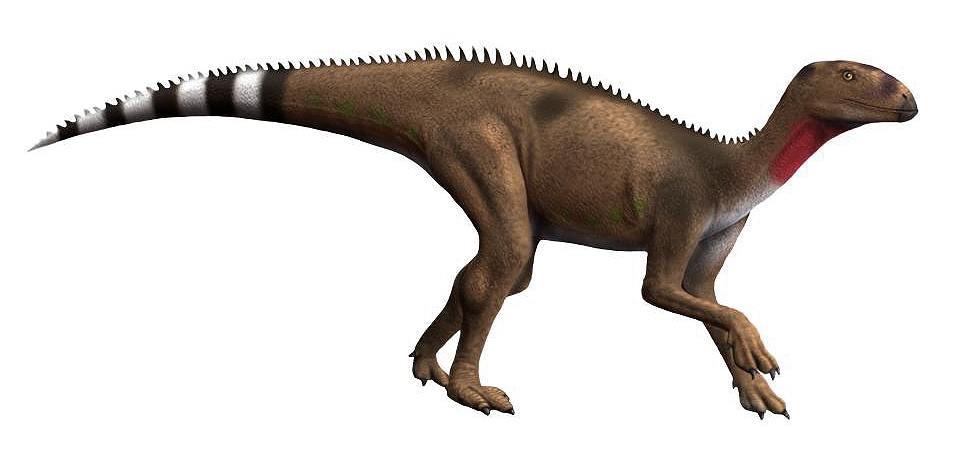
Happily, in 1972, just the right label came along. Named principally for the scrappy remains of a South African dinosaur called Fabrosaurus (after Jean Fabre, the French palaeontologist whose efforts uncovered the holotype), Fabrosauridae eventually expanded from a somewhat redundant single-species family grouping to a rather popular label for further ornithischians found from Late Triassic and Early Jurassic strata. For a long time, Lesothosaurus, from the same general time and place as Fabrosaurus (199-189 Ma, Early Jurassic), was also held to be a member of this clan. Known from much more substantial remains than the scant Fabrosaurus, Lesothosaurus informed many a Triassic diorama of scampering "fabrosaurs", running and leaping across the landscape of the imagination. Agilisaurus from the Middle Jurassic of China joined the ensemble as a late-surviving member when it was originally described as a fabrosaurid, and a smattering of suspiciously ornithischian-like teeth from the Late Triassic of North America which received the moniker Revueltosaurus claimed new ground for the group. On all fronts, geographical and temporal, the mighty Fabrosaur Empire seemed to be expanding, joining Triassic dioramas everywhere as a forerunner of sorts to the later, more advanced ornithischian groups which would populate scenes of the Jurassic and Cretaceous. Alas...

The Fall of the Fabrosaur Empire

The incriminating teeth of Revueltosaurus callenderi. Originally photographed by the (American) National Park Service and retrieved from Wikimedia Commons.

From the start, there were problems. The only fabrosaur with remains worth writing home about was Lesothosaurus, which placed the diagnosis of the grouping on a pretty shaky foundation. It was therefore easy (and tempting) to assign any tiny scraps of ornithischian from the first half of the Mesozoic to Fabrosauridae, making the group seem less a mighty empire, and more a kingdom of bits and pieces. As early as the beginning of the 1990s, as the Dinosaur Renaissance entered full swing, palaeontologists were already expressing doubts about the validity of the family as a whole, given the uncertain validity of Fabrosaurus itself. Bit by bit, pieces of fabrosaur material ended up being reassessed as belonging to heterodontosaurs (on which more another time) or even as prosauropods. Most incriminatingly, the ever-important Revueltosaurus material expanded to several skeletons, betraying its shocking identity as not even a dinosaur, but a crocodile-line archosaur close to aetosaurs. As a killing blow of sorts, more complex cladistic analyses after the turn of the century split up what was left, leaving Lesothosaurus as perhaps the sister taxon to thyreophorans (the "armored dinosaurs", ankylosaurs and stegosaurs), and Agilisaurus as closer to the base of the ornithopods and marginocephalians. The sun, it seemed, had set on the fabrosaurs.

Will the Fabrosaurs Rise Again?

Lesothosaurus diagnosticus. Illustrated by Jack Wood and retrieved from Wikimedia Commons.

Well, no, probably not - at the very least, not in the same way that they were before. "Fabrosauridae" is defined around its type species, Fabrosaurus australis, which most researchers now consider a dubious taxon. Even if more complete and diagnostic material of the same animal turned up, it would be difficult to assign it to Fabrosaurus with confidence given how little there already is to work with. However, all is not lost, for the Triassic ornithischians are not altogether gone. Pisanosaurus from the Late Triassic of Argentina and the slightly younger Eocursor of South Africa still firmly place the ornithischians within the Triassic period. However, the loss of Revueltosaurus means that these two taxa, plus some unnamed heterodontosaurid remains also from Argentina, are the only confirmed ornithischian remains from the Triassic period, and all are localized to a small part of the then-extant supercontinent of Gondwana. Since the earliest saurischian dinosaurs are also known from South America, it is not surprising that the ornithischians, too, found their origins in the same place. The question of why ornithischians seem to be so scarce in the northern continents during this time when compared with saurischians is, as of yet, unanswered, but more Triassic ornithischians surely remain undiscovered, and it's wholly possible that some will turn up from Laurasia and make us reconsider the early history of the ornithischians all over again.

And, who knows? Perhaps some very close relatives of Lesothosaurus, the last true fabrosaur, will turn up in Africa or elsewhere in the future. The lesothosaurs could well rise from the ashes of the fallen empire and shake off the dust to scamper anew across our Triassic scenery and feed a new generation of over-ravenous theropods. It's nice to dream...

For more confusing Triassic business:
For more ornithischians:
  • Bonaparte, J. F. "Pisanosaurus mertii Casamiquela and the Origin of the Ornithischia." Journal of Paleontology 50, 5. 1976.
  • Butler, Richard J., Roger M. H. Smith, and David B. Norman. "A primitive ornithischian dinosaur from the Late Triassic of South Africa, and the early evolution and diversification of Ornithischia." Proceedings of the Royal Society B 274. 2007.
  • Butler, Richard J., Paul Upchurch, and David B. Norman. "The phylogeny of the ornithischian dinosaurs." Journal of Systematic Palaeontology 5. 2008.
  • Irmis, Randall B., William G. Parker, Sterling J. Nesbitt, and Jun Liu. "Early ornithischian dinosaurs: the Triassic record." Historical Biology 19(1). 2007.
  • Parker, William G., Randall B. Irmis, Sterling J. Nesbitt, Jeffrey W. Martz, and Lori S. Browne. "The Late Triassic pseudosuchian Revueltosaurus callenderi and its implications for the diversity of early ornithischian dinosaurs." Proceedings of the Royal Society B 272. 2005.
  • Sereno, Paul C. "Lesothosaurus, “Fabrosaurids,” and the early evolution of Ornithischia." Journal of Vertebrate Paleontology 11. 1991.